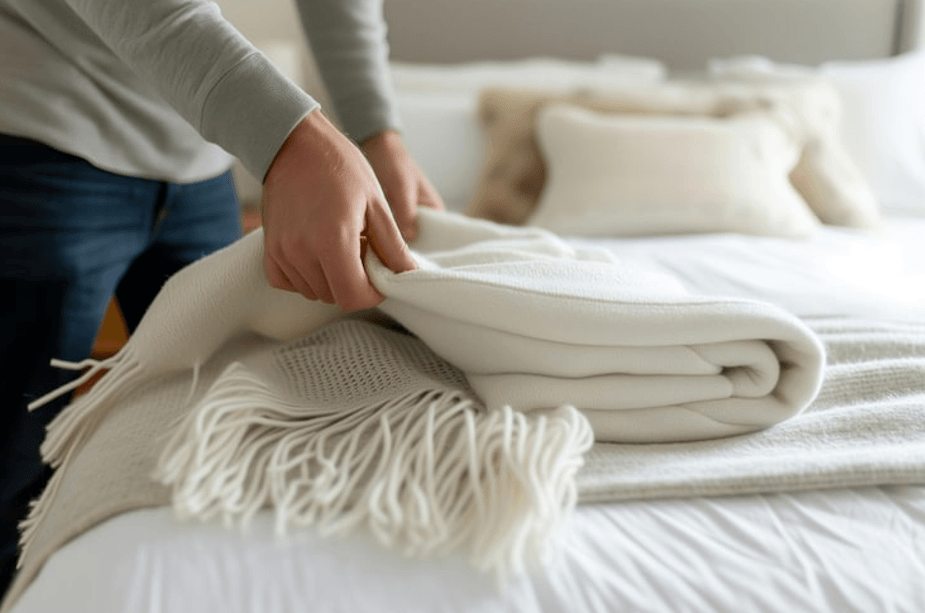
Common Mistakes People Make While Cleaning Heavy Blankets at Home
Cleaning heavy blankets at home is challenging due to their water absorption, sheer bulk, and potential to overload your washing machine.
Key Takeaways:
- Risks of Home Washing: Heavy blankets are bulky and absorb a large amount of water, which can overload and damage your home washing machine
- Need for Special Care: Washing these blankets requires specific care to prevent fabric damage, making it best to avoid common at-home mistakes and use a professional service if needed
- Benefits of Professional Services: Utilizing professional cleaners protects the blanket from shrinkage, mildew, and fiber damage
Heavy blankets (more than 15-20 pounds) need hand washing or professional laundry service. To avoid machine damage and fabric wear, follow careful washing requirements, avoid common mistakes, and consider professional handling.
This guide will indicate how the adoption of the right tips and avoiding common mistakes may prevent damage to the blanket fabric.
What Should You Not Do When Cleaning Blankets at Home
Washing the blanket seems light at first, but common errors can permanently damage the fibres.
Some common errors are-
Overloading the Washing Machine
Heavy blankets need space to move freely. Overloading a washing machine will prevent water and detergent powder from circulating. This will lead to trapped grime and soap residue.
It will lead to-
- Poor cleaning and rinsing
- Extreme mechanical strain
- Fabric and machine damage
To avoid this, consider splitting the load or taking it to a larger commercial washer.
Using Hot Water on Delicate Fills
Using hot water on delicate fabrics causes heavy blankets to warp, shrink, or lose their insulating shape.
- Hot water melts synthetic fills like polyester
- Hot temperatures cause natural fibres to contract and clump
To avoid this, always check the care tag, opt for cold water, and avoid high-heat drying.
Choosing the Wrong Detergent
Choosing the wrong detergent is a major mistake, damaging delicate fibres, trapping residues, and degrading filling.
Always opt for mild, liquid laundry detergent (free of bleach, harsh chemicals, too much soap, and fabric softeners). It will preserve your blanket’s weight distribution, color, and texture.
Skipping the Pre-soak for Stains
Skipping the pre-soak for stains will lead to permanently setting food spills or body oils into thick, dense fibers.
Here are the main reasons, why skipping the pre-soak for stains is detrimental to heavy blankets-
- Stains becoming permanent
- Damage from vigorous scrubbing
- Spreading of stain
Submerge the stained area for 15-30 minutes to break down the dirt before full blanket washing.
Not Drying Thoroughly
Not drying a heavy blanket completely leads to trapping significant moisture due to incomplete drying.
Here are the key reasons heavy blankets struggle to dry-
- Uneven heating
- Improperly spinning out or wringing before drying
To avoid these issues, the following approaches may be used-
- Tumble dryer method
- Air drying method
Ignoring the “Dry Clean Only” label
Ignoring the “dry clean only” label introduces water and harsh agitation to delicate, heavy, or structured fabrics.
It leads to severe shrinkage and warping, damage to the interior fill, color bleeding, and damage to the washing machine motor.
Blanket dry cleaning tips include-
- Pre-treating stains with mild detergent and a damp cloth
- Vacuum for dusting
- Always checking the care label
- Airing blankets in fresh sunlight to neutralize odour and reduce moisture naturally
| Blanket Type | Common Mistakes to Avoid | Correct Care Method |
| Wool | Machine-washing on a normal cycle (causes instant felting) | Cold hand-wash, cold water, and flat drying, or professional dry cleaning |
| Down & Feather | High heat and improper drying (which causes clumping) | Use a front-load machine and a low-heat tumble dry with dryer balls |
| Weighted | Washing in standard home machines (glass bead fills can cause structural damage) | Requires a high-capacity, commercial-grade washer at a professional laundry service |
| Fleece & Synthetic | Using high heat (results in annoying static build-up and pilling) | Always use cool settings for both washing and drying |
Table 1: Cleaning mistakes by blanket type
Why a Professional Laundry Service Is Better for Heavy Blankets
When home washing proves too risky or physically taxing, professional dry cleaning is highly recommended to maintain fiber softness and prevent shrinkage.
Professional laundry services are the best option for heavy blankets due to-
- Strong commercial machine capacity
- Use of industrial-grade washers and dryers
- Thorough rinsing of thick materials
- No half-wet batting
- Using high-sterilization and targeted enzyme pre-treatments
Professionals use specialized detergents and techniques for different fabrics when it comes to blankets, without causing damage.
Choosing a reliable laundry service should focus on-
- Ensuring the service handling by specialist services
- Adherence to quality standards
- Maintaining hygiene standards
- Efficient convenience and turnaround times
- Positive customer reviews
See also: Driving E-Commerce Success Through Technology 3334991688
To Summarize
Cleaning heavy blankets requires special care to prevent fabric damage, along with damage to your washing machine. Avoid common at-home mistakes and take professional laundry service if required.
Save Time And Protect Your Investments In Blanket Cleaning
The best professional blanket cleaning services will protect your blanket from shrinkage, mildew, and fiber damage. Explore local professional options and schedule your blanket cleaning at the best laundry service in your region now!